
Missing Elderly Adults With Dementia: What to Do in the First Hours
Call 911 at once, with a recent photo and the person's medication and vehicle details ready. A Silver Alert helps in some cases and not in others, so the local search and the report matter just as much.
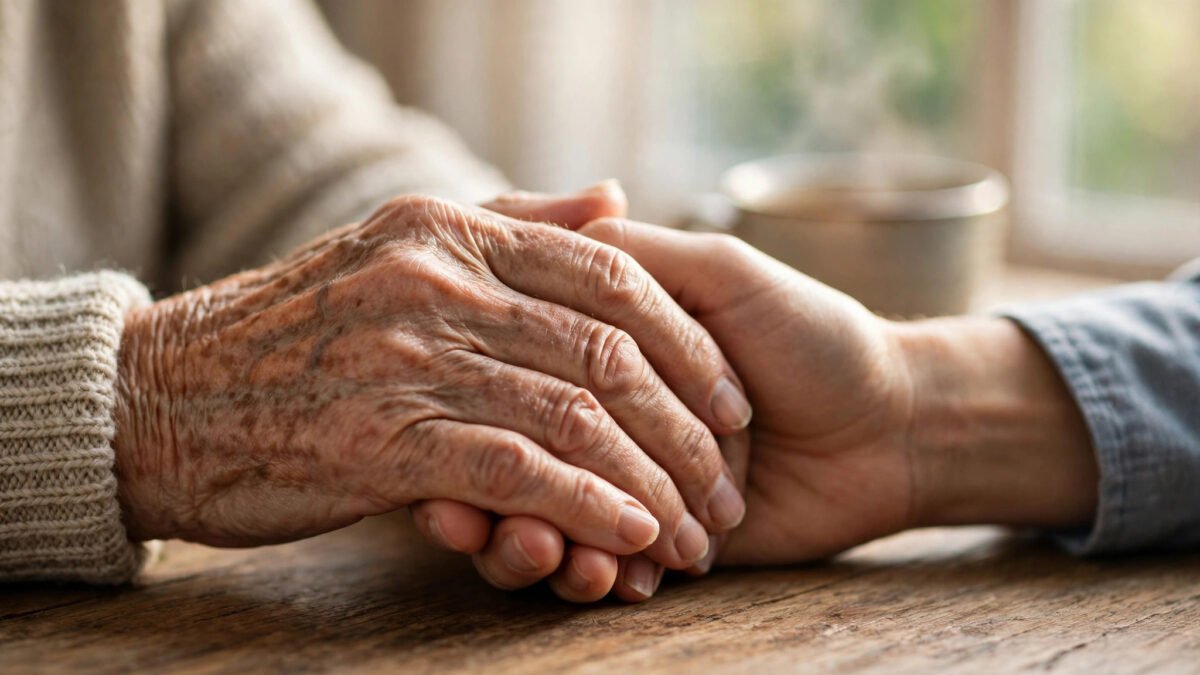
Call 911 at once. There is no waiting period to report a missing person. Have a recent photo, a description of what the person was wearing, their medication and dementia history, and their vehicle details ready, and ask the police whether a Silver Alert or a local advisory applies.
That is the short version, and it is worth acting on before reading the rest of this guide. A person with dementia who has wandered away may be confused, may not recognise where they are, and may not ask for help in the way a stranger would expect. The National Institute on Aging says many people with Alzheimer’s disease wander away from their home or caregiver. It gives no percentage for how often that happens, and no pattern for how far a person travels or where they are usually found, so this guide quotes no such figure. What follows is what official sources do say: the checks to run in the first hours, the limits of a Silver Alert, and the preparation that makes the next search faster. Our guide to how to report a missing adult covers the report itself in full.
Our opinion, stated plainly, is that families should treat the alert as a bonus, not as the plan. An alert depends on criteria, on a vehicle, on an age threshold, and on a law enforcement request, and in some states cold weather alone is not even a written trigger in the criteria we counted. The report, the photo, and the calls you make yourself do not depend on any of that. They start the moment you pick up the phone.
What should I do in the first hours when an elderly person with dementia goes missing?
Work through this checklist in order, and keep one person on the phone with the police while others run the checks. The steps below come from the Kansas City Missouri Police Department and the City of Tucson Police Department, whose missing-person guidance is the clearest official version we found.
- Call 911 at once, and have only one person make that call. The Kansas City police put it plainly: there are many myths that you have to wait up to 72 hours to report a missing person, and the fact is that there is no waiting period to report a person missing to the police. Tucson police say the same thing in their own words, that there is no waiting period to file a missing person report, and that as soon as you believe a person is missing, you should file a report. One person calls so the police get one clear account, and so the family does not give the same details twice with small differences.
- Check the places the person knows, and the places that would take them in. Before contacting police, Tucson police advise checking with the missing person’s workplace, family members, friends and usual hangouts, as well as local hospitals and jails. In practice, that means calling the people the person would turn to, and the hospitals and jails near where they were last seen, while the report is being filed. Our guide to what happens after you report a missing adult explains the timeline that follows the report.
- Give the police the details they will ask for. Kansas City police list what a report needs: date of birth; physical descriptors such as height and weight, tattoos or scars and piercings; a last known clothing description; known medical information including medical diagnosis and medications; the circumstances surrounding the disappearance and the last location where the person was known to be; and known family and friends’ phone numbers and addresses and employment or school information. Families can also check with area hospitals, medical clinics or adult detention centers. If you do not know an answer, say so. A gap the police know about is better than a guess they have to undo later.
- Answer the dementia questions directly. Tucson police ask specifically whether the person takes or needs medication, whether they have a history of dementia or mental illness, when they were last seen and how long they have been missing, and the make, model and colour of their vehicle or vehicles. They also ask for a detailed physical description, covering sex, race or ethnicity, height, weight, age, hair colour, distinguishing marks and clothes last worn. Tell the police about the dementia diagnosis, the medication the person needs, and how they usually behave when confused. That information changes how a search is run, and it is the reason the diagnosis belongs in the first call, not in a later update.
- Hand over one or two clear recent photographs as soon as possible. Tucson police ask for one or two clear recent photographs provided to police as soon as possible. The National Institute on Aging gives the same advice to caregivers in advance: keep a recent photograph or video of the person to help police if the person becomes lost. A photo from this month, showing what the person looks like now and what they were wearing when last seen, is worth more than a formal portrait from five years ago.
- Ask whether the case is in the systems, and ask about an alert. Ask the officer for the case number, ask whether the case has been entered into the state and national databases, and ask whether a Silver Alert or a local advisory applies in your state. Only a law enforcement agency can activate a Silver Alert, so the family cannot issue one directly. What the family can do is give the police everything the alert criteria ask for, and ask the question out loud. Our guide to how to report a missing adult covers the report step by step, and our directory of all 56 clearinghouses has the state clearinghouse link once the report is filed.
- Search NamUs while the police investigate. A public search of NamUs can show whether the person is already listed, and it costs nothing to check. Our NamUs search guide walks through the fields one by one. If the search comes back empty, that proves nothing about whether the person is in another system, so keep checking the other routes in this guide as well.
One piece of reassurance, with its source attached: Kansas City police state that statistically, the vast majority of reported missing persons are located or voluntarily return home within 48 to 72 hours after being reported. That is a police department statement about the cases it sees, not a national statistic, and it is not a promise about any one person. It is still worth knowing, because the first hours feel endless, and the odds the police themselves quote are better than most families fear.
Where do people with dementia go when they wander?
The honest answer is that no government source we read says where they usually go, or how far they usually travel. The National Institute on Aging confirms that many people with Alzheimer’s disease wander away from their home or caregiver, and it says nothing about a percentage, a distance, or a where-found pattern. This guide will not fill that gap with a figure from a nonprofit or an advocacy document, because no government source we checked states such a figure. If a website tells you how often people with dementia wander, or that a person not found within a day faces a particular chance of dying, ask which government source it came from. In the material we verified, there was none, and no government source we read states how long a missing elderly person survives outdoors in cold weather.
What the official record does give us is single cases, and they are worth reading as single cases, not as patterns. In November 2026, the California Highway Patrol issued a Silver Alert flyer on behalf of the Los Angeles Police Department for Vivian Williams, 69, with dementia. She was last seen on 19 November 2026 at approximately 12:00 noon at Slauson Avenue and Braddock Drive in Los Angeles, bordering Culver City, and was believed to be on foot. She was described as Black, 5 feet 6 inches, 166 pounds, with brown hair and brown eyes, last seen wearing a white long-sleeve shirt and brown pants. The public was told to call 911 or the LAPD Pacific Division at 310-482-6334. No outcome had been reported as of 23 November 2026, so this guide states no outcome for her. The point of her case here is narrow: a Silver Alert can go out for a person who walked away, with no vehicle involved, in at least one state. That matters, because in other states the top tier of alert requires a vehicle, as the next section explains.
Cold weather is the other risk the official record does describe, in general terms. The CDC defines hypothermia as a reduction in core body temperature to below 95.0 degrees Fahrenheit, below 35.0 degrees Celsius, and calls it a preventable medical emergency usually caused by prolonged exposure to cold temperatures without adequate protective clothing. Its report highlights three risk factors for hypothermia-related deaths: advanced age over 65 years, mental impairment, and substance abuse. Of hypothermia-related deaths in the United States during 1979 to 2002, 52 percent of decedents were aged over 65 years. Older persons are at particular risk, the CDC says, because their lower metabolic rate might prevent them from maintaining normal body temperatures when indoor or outdoor temperatures fall below 64.4 degrees Fahrenheit, and because older persons also might not perceive cold as well as younger persons and might be slow to compensate for the cold.
The CDC gives one worked case that links dementia and cold directly. In December 2003, a man aged 69 years with dementia was reported missing from his residence in Vermont. Despite extensive searches, his body was not found until March 2004, in the backyard of a nearby home. During that period, outdoor temperatures ranged from minus 14 degrees Fahrenheit to 57 degrees Fahrenheit. The cause of death was reported as hypothermia, with dementia as a contributing factor. That is one case, from one winter, and it proves nothing about where most people go. It does show why cold changes the urgency of a search, and why a family should tell the police at once if the weather is cold, even when the alert paperwork does not ask about it.
Will a Silver Alert go out, or is it a local advisory?
The answer depends on the state, and on details that have nothing to do with how worried the family is. A Silver Alert is a law enforcement tool, and only a law enforcement agency may activate one. The family supplies the facts; the agency decides whether the criteria are met. Our guide to alerts, including CLEAR, Silver and AMBER explains each program in full, and the examples below show how different the answer can be from one state to the next.
In California, the local law enforcement agency investigating the case determines whether Silver Alert requirements are met before requesting one, and if the California Highway Patrol concurs, the patrol activates the Silver Alert. The age threshold is 65 years or older, or no age limit if the disability criterion is met, because the statute covers a person who is 65 years of age or older, developmentally disabled or cognitively impaired. If the Silver Alert test is not met, California has a separate route: the Endangered Missing Advisory covers a person who is developmentally disabled, cognitively impaired, abducted, or unable to care for themselves, with no age threshold stated in the patrol’s criteria list. That advisory is the fallback when the Silver Alert’s age or disability test is not met, and it is worth asking about by name.
In Florida, the picture is more layered, and it should not be simplified to a single age. The standard Silver Alert age threshold is 60 and over. A person aged 18 to 59 qualifies only in a narrow exception: the person has irreversible deterioration of intellectual faculties, law enforcement has determined the person lacks the capacity to consent, and the use of dynamic message signs may be the only possible way to rescue the person. Florida’s Silver Alert also has two levels, Local and State. A State Silver Alert requires that the missing person was driving a motor vehicle at the time of disappearance and that the vehicle and licence plate number have been identified, plus verified irreversible deterioration of intellectual faculties, entry in the state and national databases, exhaustion of local resources, a belief that the person is in danger of serious bodily harm or death, and sufficient information to disseminate. Only a law enforcement agency may activate a Silver Alert, and a state alert is requested from the Florida Department of Law Enforcement’s Missing Endangered Persons Information Clearinghouse at 1-888-356-4774. A person who walked away, with no vehicle and no plate, may still get a local alert, and may not get highway signs at all.
Florida’s clearinghouse has its own age rule, and it is easy to get wrong. The clearinghouse may accept any missing adult aged 18 to 25, but a missing adult aged 26 or older only if law enforcement suspects the person is endangered or the victim of criminal activity, or the person meets Silver Alert or Purple Alert criteria. Any person may submit a report for a missing adult younger than 26, after a law enforcement report and entry in the state and national databases, but for an adult 26 or older, only the law enforcement agency having jurisdiction may submit to the clearinghouse. That is why the police report comes first in Florida, and why a family should not expect to file directly with the clearinghouse for an older adult. Our directory of all 56 clearinghouses has the link and the contact details.
Florida’s scale, when an alert does go out, is striking. In 2025, the clearinghouse activated 193 Silver Alerts, and 192 of those people were recovered. That is 61.9 percent of all 312 state alerts the clearinghouse activated in 2025, with a 99.5 percent Silver Alert recovery rate for the year. Those figures come from the Florida Department of Law Enforcement, and they describe alerts that were activated, not every missing elderly person in the state. A high recovery rate for activated alerts is still no help to a case that never qualifies for one, which is why the local search in the first section matters.
In Maryland, the structure is different again. The Maryland Department of State Police created a multi-tier designation for reporting alerts involving missing persons suffering cognitive impairment regardless of age. Tier 1 covers a person likely travelling in a vehicle, and Tier 2 covers a person likely travelling on foot. Only law enforcement can request a Silver Alert through the state police. On age, the distinction matters and should be stated exactly: no numeric age appears in the Maryland statute as read, and the state police describe the tiers as regardless of age. The 60 and over figure appears only in local agency policies citing that statute, and it could not be verified from a state source whether 60 and over is a current state police operational guideline or a local policy carryover. Do not treat 60 and over as Maryland’s statutory threshold. It is a local policy figure, and the statute itself sets no number.
Arizona, by contrast, removed the delay altogether. The 2025 expansion of the SAFE Alert, formerly the Silver Alert, requires alerts to be issued immediately when the criteria are met, and prohibits a Silver Alert from being denied or delayed due to administrative processes, prior missing episodes or discretionary assessments. If your state has a rule like that, the family still cannot issue the alert, and the police still decide whether the criteria are met. The difference is that the decision cannot be put off for paperwork.
Our analysis: cold weather is a medical risk that the alert paperwork mostly ignores. We counted the alert criteria for 51 jurisdictions, and only 11 of them name weather or environmental conditions explicitly: Arizona, California, Idaho, Maine, Maryland, Mississippi, Montana, Nebraska, Pennsylvania, Tennessee and Washington. In the other 40, cold weather alone is not a written trigger in the criteria read. Set that against the CDC figure that 52 percent of United States hypothermia decedents from 1979 to 2002 were over 65, and the gap is plain. The alert system does not automatically treat a cold night as a reason to act, so the family and the police have to treat it as one themselves, by calling at once and by saying the temperature out loud in the first call.
| Measure | Count | What it means for a family |
|---|---|---|
| Jurisdictions naming weather or environmental conditions in alert criteria | 11 of 51 | Arizona, California, Idaho, Maine, Maryland, Mississippi, Montana, Nebraska, Pennsylvania, Tennessee and Washington |
| Jurisdictions not naming weather or environmental conditions in alert criteria | 40 of 51 | Cold weather alone is not a written trigger in the criteria read |
| Share of United States hypothermia decedents, 1979 to 2002, aged over 65 | 52 percent | Cold is a real risk for a missing elderly person, whether or not the alert criteria mention it |
What can families prepare now, before someone goes missing?
Preparation is the part of this guide that costs nothing and saves the most time on the worst day. The National Institute on Aging advises caregivers to make sure the person carries identification or wears a medical bracelet with their name and address and the caregiver’s phone number. If the person might remove a bracelet, the institute advises labelling their clothes with a name and phone number. GPS systems are available to track the person’s location, the institute says, and it advises letting neighbours and the local police know that the person with Alzheimer’s tends to wander. Keep a recent photograph or video of the person to help police if the person becomes lost. Each of those steps is small on its own. Together, they are the difference between a report the police can act on in minutes and a report that waits while a family searches for a photo and a phone number.
Keep the details the police will ask for in one place, ready to hand over. That means date of birth, height and weight, distinguishing marks, the medication the person takes and needs, the dementia diagnosis, the vehicle make, model and colour, and one or two clear recent photographs. Our guide to how to report a missing adult lists the full set of details a report needs, and our guide to what happens after you report a missing adult explains what the police do with them once the report is filed. If the person drives, keep the licence plate number with the vehicle details. In Florida, a State Silver Alert requires the vehicle and licence plate number to have been identified, so a plate number a family can give at once is not a small detail.
There is also a program worth knowing about before you need it. The National Institute on Aging names the safe return program as MedicAlert plus Alzheimer’s Association Safe and Found, and gives a contact number for it, adding that the program is not affiliated with the institute and that there may be a charge for this service. The program’s own material describes a 24-hour nationwide emergency response service for individuals with dementia who wander or have a medical emergency. When a member is lost, the caregiver calls 911 and then the 24-hour emergency response line, and the member’s information and photo are faxed to local police who conduct the search. Only individuals with Alzheimer’s, mild cognitive impairment or dementia are eligible. This guide gives no price and no single hotline number for the program, because the numbers differ across the program’s own materials and a county reprint, and the current price and the correct current hotline were not verified from the program’s own site. Check the program’s own site before relying on a number printed elsewhere, and do not pay for enrolment on the basis of a number in an old brochure.
One last preparation step is the least technical and the most useful: tell the neighbours. The institute’s advice to let neighbours and the local police know that the person tends to wander is not a formality. Neighbours are the people most likely to see someone walking past their house, confused, in clothes that do not match the weather. A neighbour who already knows the person’s name, and already has the caregiver’s number, can call at once instead of wondering whether to get involved. The same applies to the local police non-emergency line, before anything happens. A note on file that a person in a particular house has dementia and tends to wander gives the first call a context it would otherwise lack.
If this happens tonight, the order is the same as the order at the top of this guide. Call 911 at once, with one person making the call. Hand over the photo, the clothing description, the medication and the vehicle details. Ask about a Silver Alert or a local advisory, and ask whether the case is in the systems. Then check NamUs, using our NamUs search guide, and check the state clearinghouse. Our guide to alerts, including CLEAR, Silver and AMBER explains what each alert can do, and when police do confirm a safe return, they say so in those words, as in the case of Kenneth Roberts, found safe in Burlington. The alert may help, and it may not apply. The report, the photo, and the people who already know the person wanders are the parts no criteria can take away.
Sources (10)
- National Institute on Aging, Coping With Alzheimer's Behaviors: Wandering and Getting Lost
- Alzheimer's Association and MedicAlert Foundation, MedicAlert + Alzheimer's Association Safe Return brochure
- Kansas City Missouri Police Department, Missing Persons
- City of Tucson Police Department, Report a Missing Person
- CDC, Hypothermia-Related Deaths, United States, 2003-2004
- California Highway Patrol, Silver Alert flyer for Vivian Williams via CHP - Alerts
- MyNewsLA, Silver Alert Activated for Missing 69-Year-Old Woman in LA (corroborating the CHP flyer; location given as Los Angeles bordering Culver City)
- FDLE, Commissioner Mark Glass Highlights Major 2025 Accomplishments
- FDLE, Missing Endangered Persons Information Clearinghouse (MEPIC)
- Maryland Department of State Police, Alert Systems