
Can Police Track a Missing Person’s Phone? How Phone Pings Work in the US
Police can seek a missing adult's phone location through a warrant or an emergency request, but the result is an area, not an exact address. The precision depends on which system produces it.
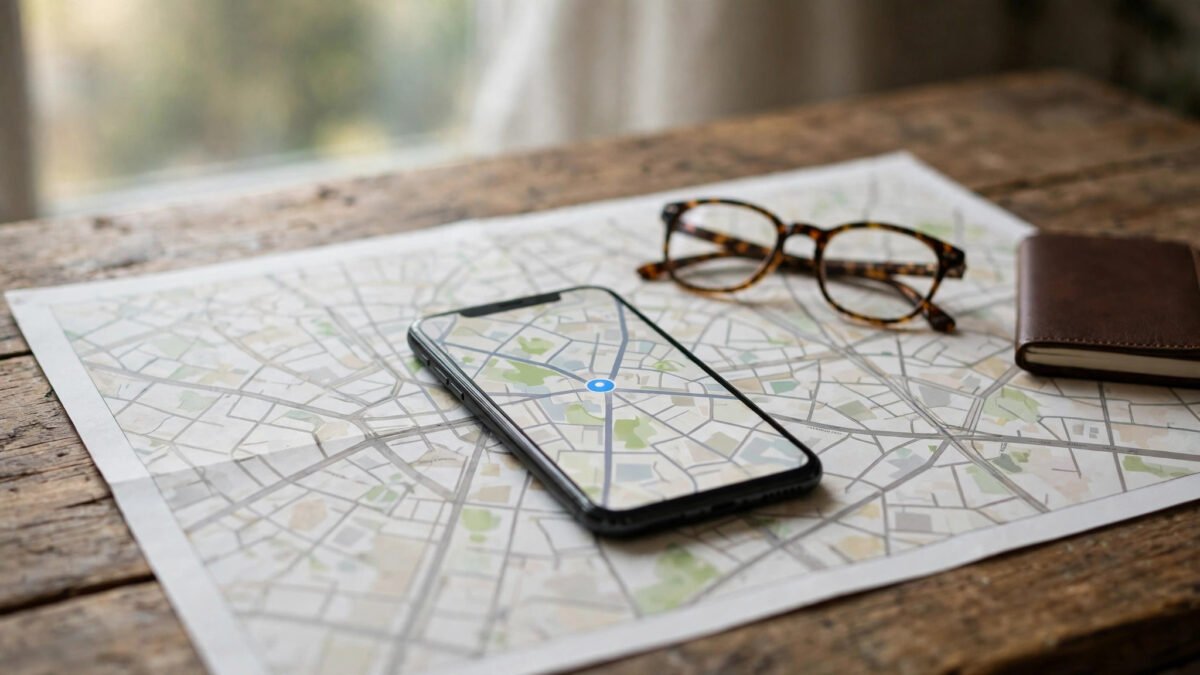
Yes, police can seek a missing adult’s phone location, usually through a warrant for historical location records or through an emergency request to the carrier or the phone maker. What comes back is an area, not an exact address, and the size of that area depends on which system produced it. If you are at the start of this, file the report first. Our guide to how to report a missing adult covers that step, and the phone is one of the details to hand over with it.
That gap between what people expect and what a ping actually shows is the whole story of this guide. Television makes phone tracking look like a dot on a map that follows a person down the street. The verified numbers tell a different story. Four systems that all get called phone tracking give four different answers, and none of them promises an exact live location for a missing-person case. The table below puts them side by side, because once you see the spread, the rest of the law and the practical advice makes sense.
Our analysis: the precision gap is the point. We compiled the four figures below from the sources in this guide. The 911 figures come from FCC rules for 911 calls. The Google figures come from Google’s own support page for finding a lost Android device. They describe different systems, different calls, and different kinds of estimates, so they should never be quoted as if they were one number. The count behind the table is four figures, three authorities, and zero promises of an exact live location for a non-911 carrier request.
| System | What it promises | How precise it is |
|---|---|---|
| FCC wireless 911, horizontal location | Location within 50 metres for 80 percent of wireless 911 calls | 50 metres, for 80 percent of calls |
| FCC wireless 911, vertical (z-axis) location | Location within 3 metres above or below for 80 percent of wireless E911 calls from a z-axis capable device | Plus or minus 3 metres, for 80 percent of calls |
| Google Find Hub, GPS estimate | Location estimated from GPS satellites | Up to around 20 metres |
| Google Find Hub, cell-tower estimate | Location estimated from connection to mobile data | Up to a few thousand metres |
Read that table as a warning against false precision. Fifty metres is roughly half a city block. A few thousand metres is a neighbourhood, or more. A family that hears the word ping and pictures a front door is being set up for disappointment, and a search that starts from the wrong expectation wastes the hours when a tighter lead would have helped. Our view is that families deserve the range up front, before anyone talks about warrants or apps, because the range decides what the police can actually do with the answer.
Can police track a missing person’s phone?
Yes, in the sense that the law gives police routes to ask for location records, and it also sets limits on those routes. The starting point is a Supreme Court case, Carpenter v. United States, decided on 22 June 2018. The Court held that the Government’s acquisition of historical cell-site location information, known as CSLI, is a Fourth Amendment search. In that case, wireless carriers produced 12,898 location points cataloguing Timothy Carpenter’s movements over 127 days, an average of 101 data points per day. Each time a phone connects to a cell site it generates a time-stamped record known as CSLI, which carriers collect and store for their own business purposes.
Under Carpenter, the Government generally needs a warrant supported by probable cause to obtain historical CSLI. A court order under 18 U.S.C. 2703(d), which requires only reasonable grounds for believing the records are relevant and material to an ongoing investigation, is not a permissible mechanism for accessing historical cell-site records, because that showing falls well short of the probable cause required for a warrant. That is a high bar, and it is deliberate. Location history over days or weeks reveals a great deal about a person’s life, and the Court treated it accordingly.
Carpenter is also a narrow decision, and that narrowness matters. The Court said the decision does not express a view on matters not before the Court, does not disturb the application of Smith v. Maryland and United States v. Miller, and does not call into question conventional surveillance techniques and tools such as security cameras. The syllabus also states that even though the Government will generally need a warrant to access CSLI, case-specific exceptions, for example exigent circumstances, may support a warrantless search. So the honest summary is that Carpenter settled the warrant rule for historical CSLI, and left the rest of the field to be argued case by case. This guide does not go further than that, because the sources we verified do not go further than that.
There is a second route, and it is the one most likely to matter in the first hours. Under 18 U.S.C. 2702, a provider of an electronic communication service or remote computing service to the public shall not knowingly divulge the contents of a communication in electronic storage, or a record or other information pertaining to a subscriber or customer, to any governmental entity, except as provided in the statute. The emergency exception is in the same section. Under 18 U.S.C. 2702(b)(8), a provider may divulge the contents of a communication to a governmental entity if the provider, in good faith, believes that an emergency involving danger of death or serious physical injury to any person requires disclosure without delay of communications relating to the emergency. Under 18 U.S.C. 2702(c)(4), a provider may divulge a record or other information pertaining to a subscriber or customer, not including the contents of communications, to a governmental entity on the same good-faith emergency standard.
The word to notice there is may. Emergency disclosure under 18 U.S.C. 2702 is voluntary, not compulsory. The statute says a provider may divulge, and Apple’s U.S. Legal Process Guidelines, published in October 2025, state that under 18 U.S.C. 2702(b)(8) and 2702(c)(4) Apple is permitted, but not required, to voluntarily disclose information, including contents of communications and customer records, to a federal, state, or local governmental entity on that good-faith emergency standard. Apple will only provide customer content to US government and law enforcement in response to a search warrant issued upon a showing of probable cause, or customer consent, except in emergency circumstances as defined in the Electronic Communications Privacy Act. An emergency disclosure request must be made by a government or law enforcement officer using the Emergency Government and Law Enforcement Information Request form, sent from an official government or law enforcement email address to exigent@apple.com with Emergency Request in the subject line. That is a police route, not a family route, and it runs on the officer’s judgement that the emergency standard is met.
Two more provisions fill out the picture. Under 18 U.S.C. 2703(a), a governmental entity may require a provider to disclose the contents of a wire or electronic communication in electronic storage for 180 days or less only pursuant to a warrant issued using the procedures in the Federal Rules of Criminal Procedure, or equivalent State warrant procedures. And under 18 U.S.C. 2703(f), law enforcement may ask Apple to preserve information. Apple preserves a one-time data pull of the requested existing customer data available at the time of the request for 90 days, extendable for one additional 90-day period on a renewed request. Preservation is not the same as disclosure, but it stops the data disappearing while the warrant or the emergency request is worked through. If you want the wider picture of what follows a report, our guide to what happens after you report a missing adult walks through the timeline after the first call.
What does a phone ping actually show?
A phone ping is a record of a connection, and the precision of that record depends on what the phone connected to. A GPS fix uses satellites. A Wi-Fi estimate uses the location of nearby Wi-Fi networks. A cell-tower estimate uses the tower the phone connected to, and a tower covers a wide area. Google’s own support page puts numbers on two of those: GPS is up to around 20 meters, sometimes inaccurate inside buildings or underground, while connection to mobile data through cell towers can be accurate up to a few thousand meters. If the device’s current location is unavailable, its last known location may still be available. That last known location is often the most useful thing a family actually gets, and it is worth asking the police specifically what the last recorded location was, and when it was recorded.
The FCC numbers in the table above belong to a different setting, and the distinction is worth holding on to. All commercial mobile radio service providers must provide either dispatchable location or horizontal location within 50 meters for 80 percent of all wireless 911 calls, under 47 CFR 9.10(i)(2)(i)(A). The underlying Fourth Report and Order phased this in, at 40 percent within 2 years, 50 percent within 3 years, 70 percent within 5 years, and 80 percent within 6 years of the rule’s effective date. The vertical standard is separate. The FCC’s z-axis location accuracy metric requires providers that deploy z-axis technology to locate a handset within 3 meters above or below, plus or minus 3 meters, for 80 percent of wireless E911 calls made from the z-axis capable device. Nationwide providers were required to deploy dispatchable location or z-axis technology meeting that metric in the top 25 cellular market areas by 3 April 2021 and in the top 50 by 3 April 2023, with non-nationwide providers given an additional year for each benchmark.
Dispatchable location itself has a specific meaning. It is a location delivered to the public safety answering point with a 911 call consisting of the street address of the calling party plus additional information such as suite, apartment, floor, or similar information necessary to adequately identify the location of the calling party. That is the standard for a 911 call, where the phone is in contact with the emergency system. A carrier ping outside a 911 call is a different request, under different rules, and the 911 figures do not transfer across to it as a promise. The 80 percent figure is also a benchmark across calls, not a guarantee for any one phone on any one day. Our reading is that the 911 numbers show what the system can do at its best, in the setting it was built for, and the cell-tower number shows what a family should expect when the phone is simply somewhere in a network, out of contact.
One more point from the Carpenter numbers helps here. An average of 101 location points per day sounds like constant tracking, and in a sense it is, because every connection to a cell site leaves a record. But a record of a connection is still a record of a tower, not a record of a room. Historical CSLI can show a pattern of movement across days, which is why the Court required a warrant for it, and it can narrow a search to an area. It cannot, on its own, put a person at a front door. Anyone who tells a family otherwise is selling certainty the records do not contain.
What can families do themselves?
Start with what you can hand the police, because that is the fastest way to help the phone become a lead. The Colorado Bureau of Investigation’s missing-persons checklist for families advises providing law enforcement with information about who the missing person’s cell phone provider is, retaining the missing person’s cell phone and landline phone records if available, getting the contact information of the officer who takes the report, asking for the agency case number, and confirming with the investigating agency that the case has been entered into the National Crime Information Center, or NCIC, database. That checklist is short, and every item on it is something only the family can supply or confirm. Give the carrier name, keep the records you already have, and write down the officer’s name and the case number before you leave. Our guide to how to report a missing adult covers the report itself, and our guide to what happens after you report a missing adult explains what the police do with it next.
The same Colorado checklist carries a warning that families should take seriously. It advises families to ask law enforcement before doing any of their own investigating, for example searching the missing person’s residence or looking through their social media accounts, because it could be detrimental to the investigation. That applies to the phone as much as to anything else. Do not go through the person’s accounts or devices on your own initiative without asking the investigating agency first. The instinct to look is understandable, and the advice is to check before acting on it.
Next, check the locating features that were set up before the person went missing, because those are the only ones that can help now. Apple Find My must be set up on the device before it is lost. Apple Support states that to use Find My features you need to set up and turn on Find My device on each device before it is lost, and the device must be able to connect to the Internet. Find My is turned on in Settings under the owner’s name, then Find My device. Turning on the Find My network lets the device be found even when offline, and Send Last Location sends the device’s location to Apple automatically when its battery charge becomes critically low. The Find My network is a crowdsourced network of over a billion Apple devices that use Bluetooth to detect a device’s location and report its approximate location back to the owner, anonymously and encrypted. On a supported iPhone, turning on the Find My network allows the iPhone to be located for up to 24 hours after it is turned off, or up to 5 hours in power reserve mode.
A family member can help locate another family member’s missing device only if the following was done on the device before it was lost: Location Services turned on, Find My iPhone turned on, including Enable Offline Finding and Send Last Location, and location shared with family members through Family Sharing location sharing. The family member then opens Find My, or the iCloud website, and signs in with their own Apple ID to see the device on a map. If that sharing was never set up, there is no Apple route described in the sources we verified that lets a family member switch it on after the fact. That is a hard limit, and it is better to learn it in one sentence here than to spend a day trying to work around it.
Google’s system works differently, and the setup question matters there too. Google Find Hub is automatically turned on if a Google Account has been added to an Android device. By default the device stores encrypted recent locations with Google and participates in the Find Hub network, a crowdsourced network of Android devices using end-to-end encrypted location information. To get help from the network with finding items on the device, a PIN, pattern, or password must be set. To secure or erase an Android device remotely, the device must have power, be connected to mobile data or Wi-Fi, be signed in to a Google Account, have Find Hub turned on, and be visible on Google Play. A mobile service provider can use a device’s IMEI number to disable the device, and the IMEI can be found in the phone’s settings or with Find Hub. Keep the IMEI with the case notes, alongside the carrier name and the case number.
While the phone work is under way, do not let the other systems wait. Search NamUs, and check the state clearinghouse for the state where the person was last seen. Our guide to how to search NamUs walks through the search field by field, our comparison of NamUs vs NCIC explains which system families can actually use, and our directory of all 56 clearinghouses has the link for every state and territory. The phone may narrow the area, and those systems may hold the record that matches it. The two kinds of work belong together, and the case that gets found is usually the one somebody kept looking for in more than one place, as in the case of Kenneth Roberts, found safe in Burlington.
What does not work?
The first thing that does not work is waiting for a locating feature that was never turned on. Apple Find My must be set up before the device is lost, and family location sharing must have been switched on before the loss as well. Google Find Hub needs a Google Account on the device, and remote securing or erasing needs power, a connection, a signed-in account, Find Hub turned on, and visibility on Google Play. If those conditions were not met, the app cannot conjure a location from nothing. Check what was set up, accept the answer, and put the time into the report, the carrier details, and the searches in NamUs and the state clearinghouse instead. Our guide to how to search NamUs and our clearinghouse directory are the next steps when the phone gives you nothing.
The second thing that does not work is treating a single ping as an address. A cell-tower estimate can be accurate up to a few thousand meters, and a GPS estimate is up to around 20 meters, sometimes inaccurate inside buildings or underground. The FCC 911 figures, 50 meters horizontal and plus or minus 3 meters vertical for 80 percent of calls, apply to 911 calls, not to every carrier request. A location that covers a few thousand meters is a search area, and it needs groundwork, calls, and the other systems to turn it into a find. Expecting a door number from it will only make a useful lead look like a failure.
The third thing that does not work is assuming the emergency route is automatic. Emergency disclosure under 18 U.S.C. 2702 is voluntary. A provider may divulge on the good-faith emergency standard, and Apple states plainly that it is permitted, but not required, to do so. That does not mean the request is pointless. It means the decision sits with the provider and with the officer making the request, and a family cannot compel it by asking the carrier directly. The route runs through the investigating agency, which is why the carrier name, the case number, and the officer’s contact details from the Colorado checklist matter so much. Give the police what they need to make the request, and let them make it.
The fourth thing that does not work is doing your own investigating without asking first. The Colorado Bureau of Investigation advises families to ask law enforcement before searching the missing person’s residence or looking through their social media accounts, because it could be detrimental to the investigation. That warning is easy to ignore when you are frightened and want to act, and it is worth repeating precisely because of that. Ask the investigating agency what you can check, and what you should leave alone. A step that feels helpful can cost the investigation a lead, and nobody wants to learn that afterwards. For the wider order of work after the report, our guide to what happens after you report a missing adult and our comparison of NamUs vs NCIC set out the systems in the order we would use them.
Phone tracking can help find a missing adult, and it has helped in cases like that of Kenneth Roberts, found safe in Burlington, where the official update named the place as well as the outcome. But the help it gives is bounded by law, by setup, and by physics. The law requires a warrant for historical location records, with an emergency exception that a provider may, but is not required to, honour. The setup has to have happened before the loss. And the physics gives you an area measured in metres or thousands of metres, not a room. Hold those three limits together, hand the police the carrier name and the case details, check the locating features that were already on, and keep searching NamUs and the state clearinghouse while the phone work runs. That is the honest version of what a phone ping can do, and it is enough to act on.
Sources
Supreme Court of the United States, Carpenter v. United States, 585 U.S. 296 (2018)
18 U.S.C. 2702, U.S. Code, Government Publishing Office
18 U.S.C. 2703, U.S. Code, Government Publishing Office
FCC, Wireless E911 Location Accuracy Requirements, Fourth Report and Order, FCC 15-9
National 911 Program, Dispatchable Location Requirements (Oct 2020)
FCC, Small Entity Compliance Guide, Wireless E911 Location Accuracy Requirements, DA 20-458
FCC, Wireless E911 Location Accuracy Requirements, Fifth Report and Order, FCC 19-124
Apple Support, Use Find My iPhone to locate your device
Apple Support, How to turn on Find My on your iPhone, iPad, or Mac
Apple Support, Add your iPhone to Find My
Apple Support, Locate a family member’s missing device on iPhone
Apple, Legal Process Guidelines, Government and Law Enforcement within the United States (Oct 2025)
Google Support, Find, secure, or erase a lost Android device
Colorado Bureau of Investigation, Missing Persons Checklist